Definitions
Definition: Ligand
A species that contains a lone pair of electrons that forms a dative covalent bond with a central metal ion.
Definition: Complex
A species or ion formed by a central metal ion surrounded by one or more ligands.
Definition: Coordination Number
The number of coordinate bonds formed between the ligands and central metal ion.
Warning
It is NOT just the number of ligands!
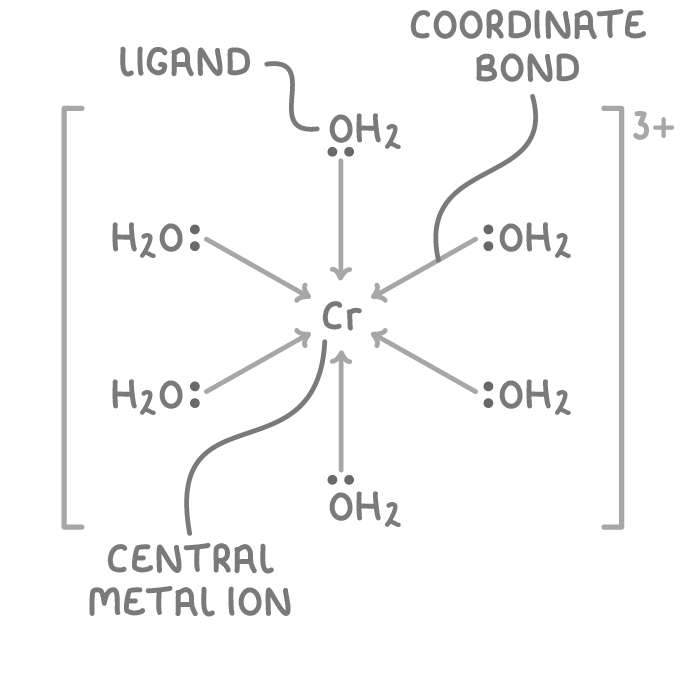
Example of a Complex Ion
Complex Ion Structure In this case:
- Ligand:
- Complex:
- Coordination Number:
Types of Ligands
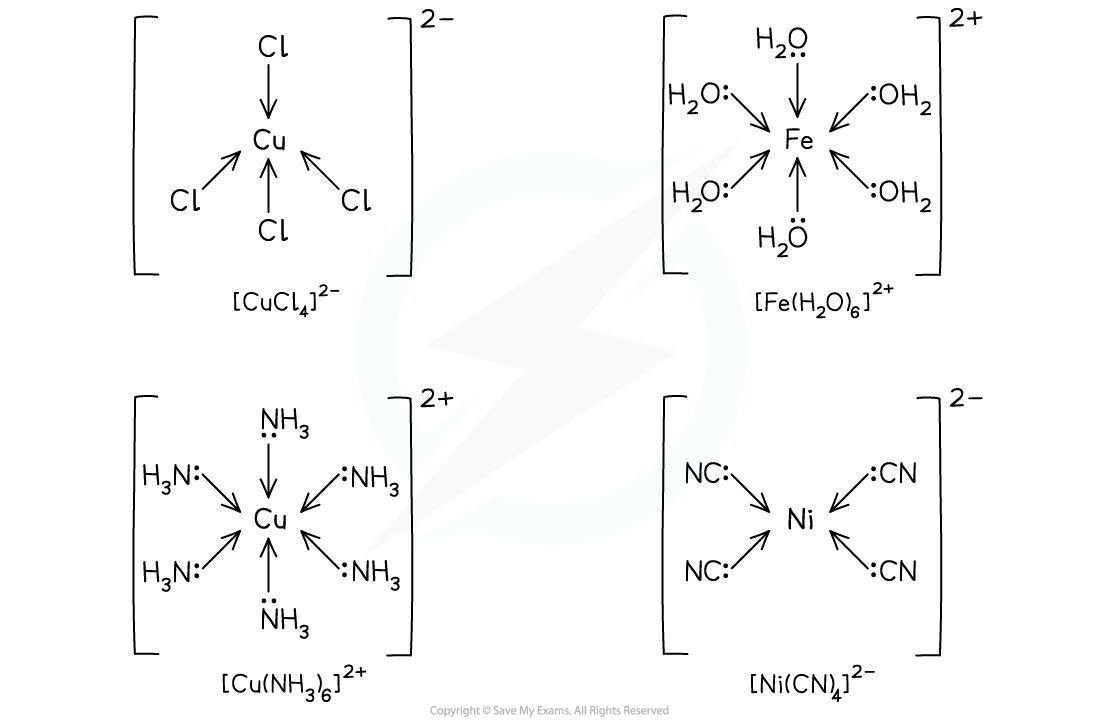
Monodentate Ligand
Monodentate Ligand
Species that donates one lone pair of electrons to form a single dative covalent bond to a central metal ion.
Examples of Monodentate Ligands
| | |
Examples of Monodentate ligands.
Bidentate Ligand
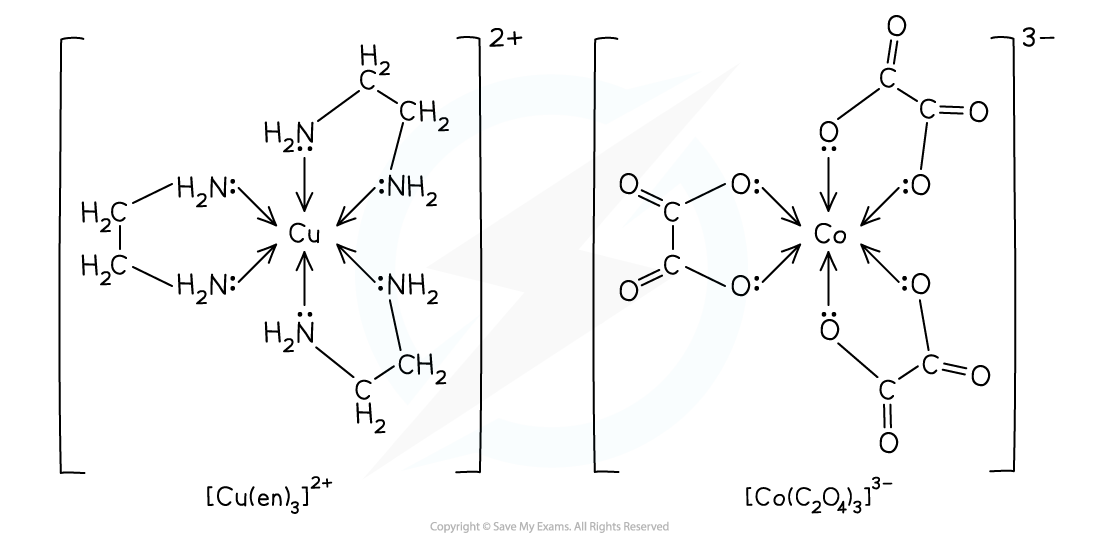
Bidentate Ligand
Species that donates two lone pairs of electrons to form dative covalent bonds to a central metal ion
Examples of Bidentate Ligands
- 1,2-diaminoethane:
abbreviated as en - Ethanedioate:
abbreviated as ox
Examples of Bidentate ligands.
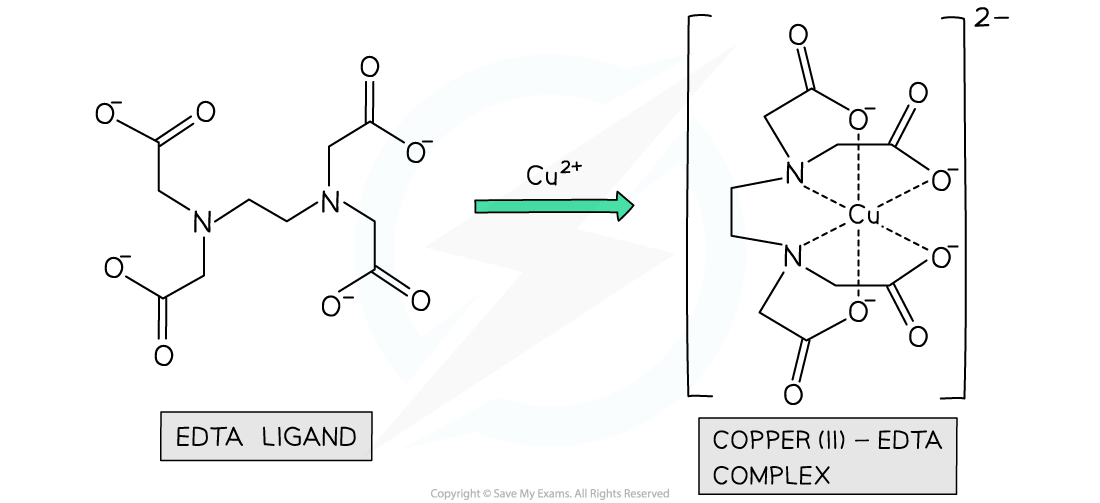
Polydentate Ligands
Polydentate Ligand
A species that donates more than two lone pairs of electrons to form dative covalent bonds to a central metal ion.
Example of Multidentate Ligand
- Ethylenediaminetetraacetic acid abbreviated as EDTA
(Hexadentate - forms 6 coordinate bonds)
EDTA
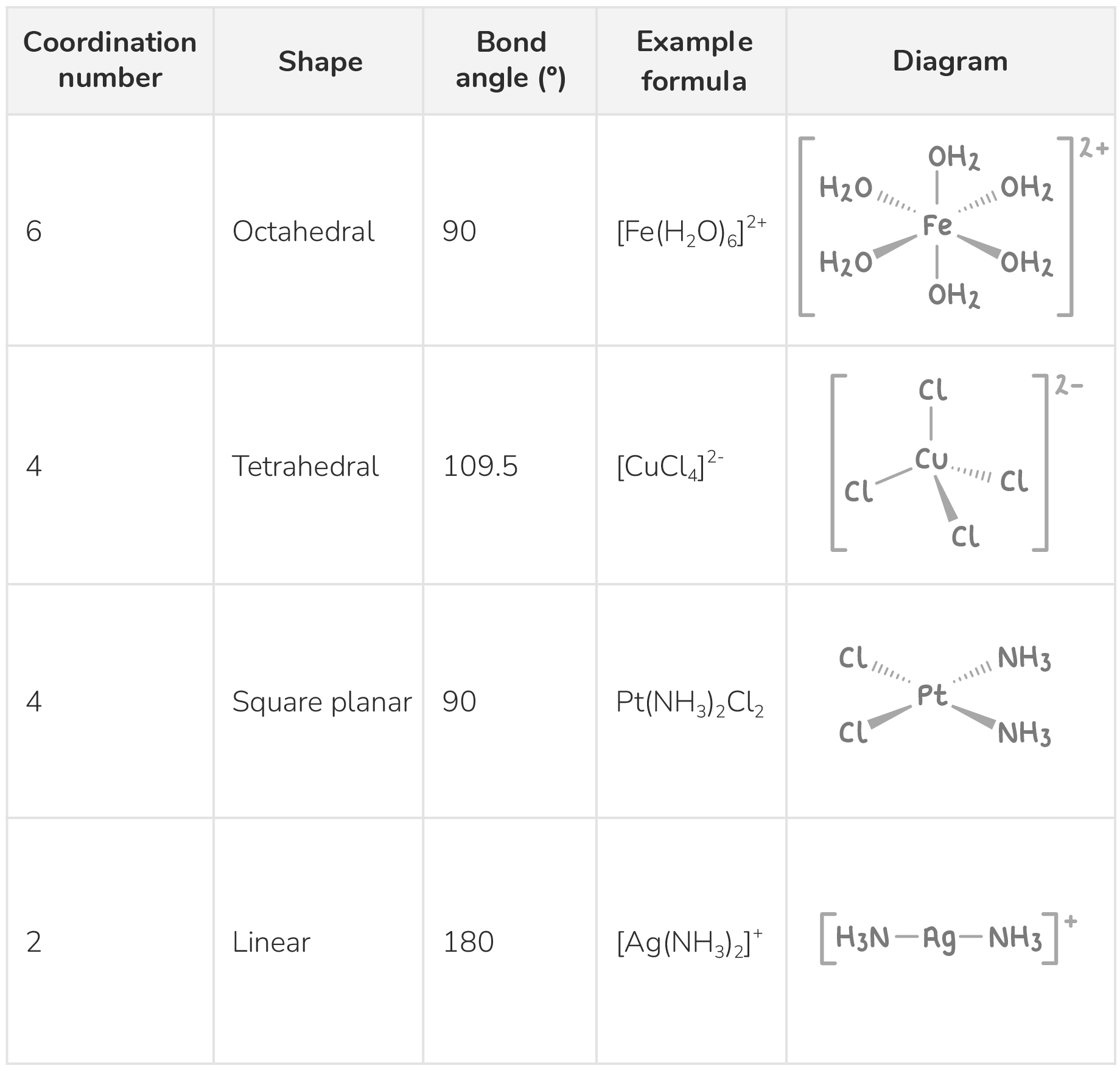
Geometry of Complex Ions
Shape of Complexes
The shape of a complex depends on its coordination number and the size of the ligands.
Coordination Number 6 (Octahedral)
- Formed with small ligands like
and - Bond angle: 90°
- Example:
Coordination Number 4 (Tetrahedral)
- Formed with larger, repelling ligands like
- Bond angle: 109.5°
- Example:
Coordination Number 4 (Square Planar)
- Commonly seen with
and - Bond angle: 90°
- Example: Cisplatin
Coordination Number 2 (Linear)
- Common with
and - Bond angle: 180°
- Example: Tollens’ reagent