Here is a comprehensive, high-yield Obsidian Markdown note tailored specifically for the Cambridge CIE AS/A-Level Chemistry (9701) syllabus. It synthesizes the syllabus requirements, detailed revision notes, and highly specific examiner insights derived from past paper mark schemes.
To use this, simply copy and paste the raw text into a new note in your Obsidian vault. The callouts (> [!note], > [!warning], etc.) will format beautifully.
⚛️ Chapter 9: The Periodic Table & Chemical Periodicity
Tags: chemistry alevel cie #9701 periodicity inorganic Syllabus Focus: 9.1 Physical Periodicity (Period 3), 9.2 Chemical Periodicity (Period 3), 9.3 Predicting Properties
What is Periodicity?
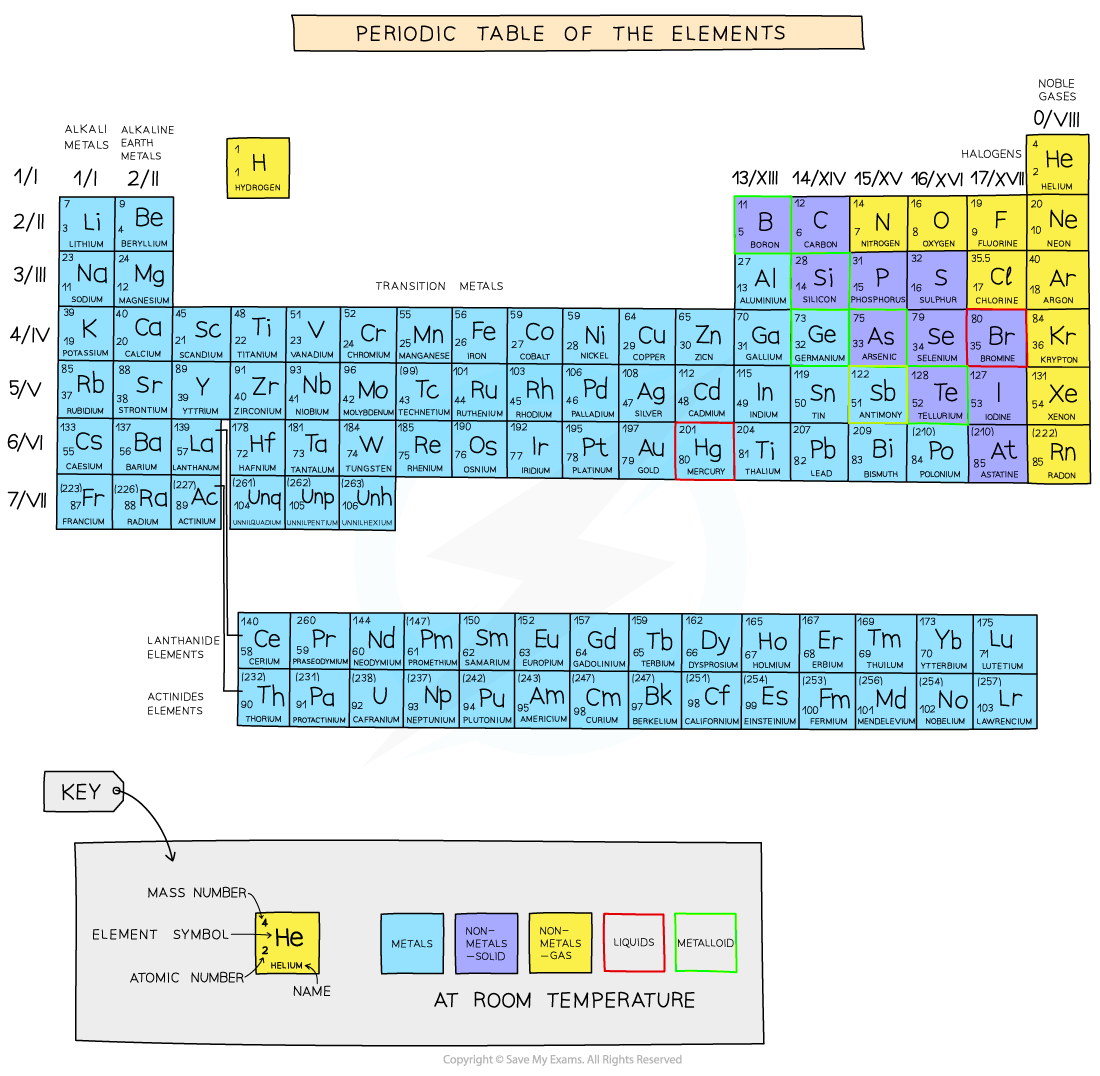
Periodicity is the repeating pattern of physical and chemical properties of elements as you move across the periods of the Periodic Table. In A-Level Chemistry, Period 3 (Na to Ar) is our primary model for understanding these trends.
📉 1. Physical Properties of Period 3 Elements (9.1)
Physical properties are dictated entirely by the chemical bonding and macromolecular structure of the elements.
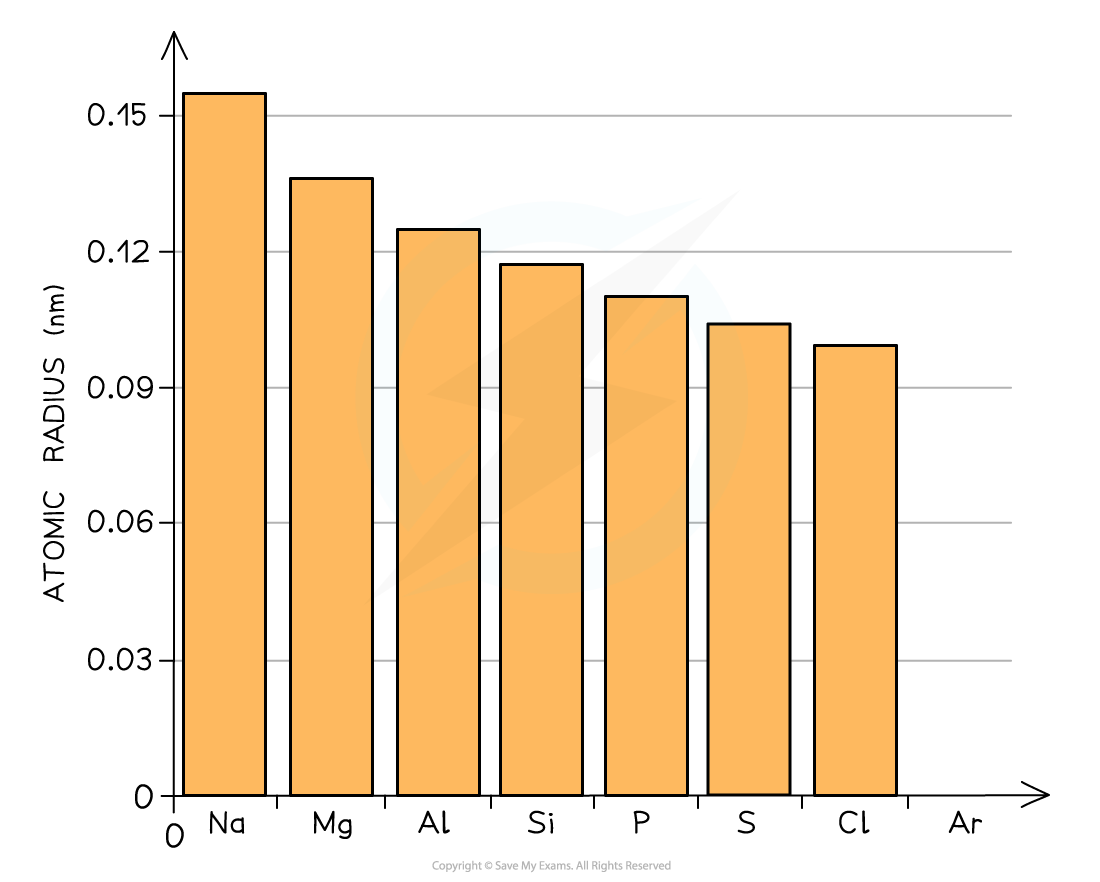
A. Atomic Radius
- Trend: Decreases across the period.
- Reason: The nuclear charge (number of protons) increases, pulling the electrons in more tightly. The shielding effect remains roughly constant because the extra electrons are added to the same principal quantum shell.
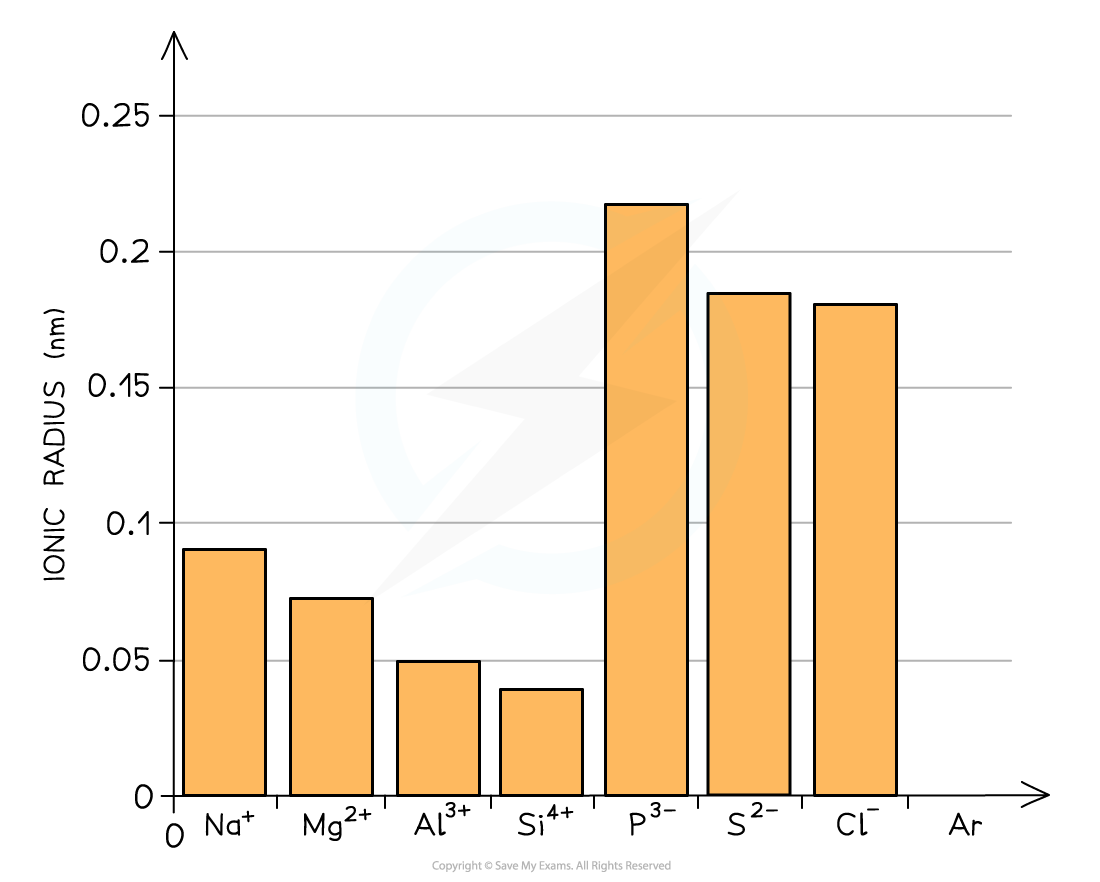
B. Ionic Radius
- Trend for Cations (Na⁺ to Si⁴⁺): Decreases. They are much smaller than their parent atoms (loss of the outer shell = less shielding). The increasing nuclear charge pulls the remaining shell in tighter.
- Trend for Anions (P³⁻ to Cl⁻): Decreases. They are larger than their parent atoms (added electrons increase electron-electron repulsion, causing the cloud to expand). Across the non-metals, nuclear charge increases, so the radius shrinks from P³⁻ to Cl⁻.
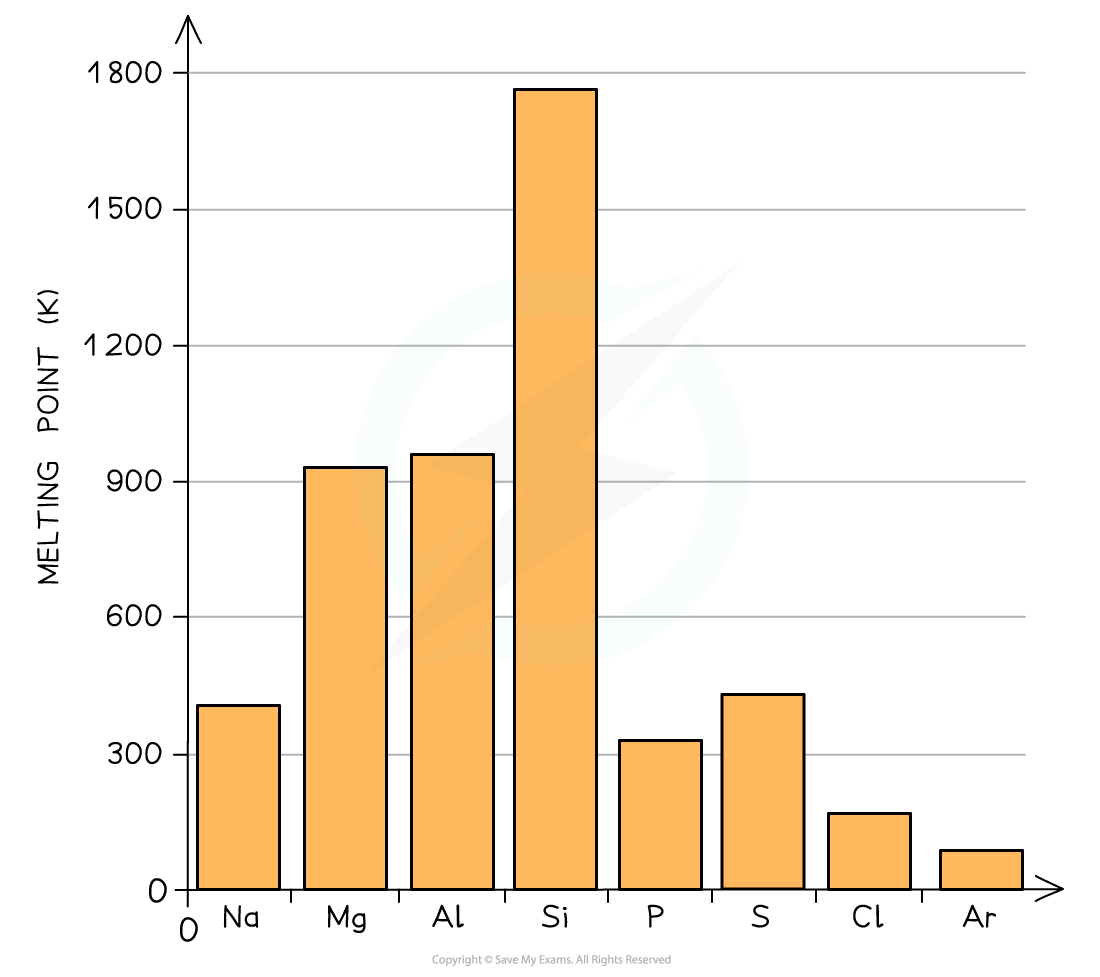
C. Melting Point
Melting points depend on the type of structure and bonding.
- Na, Mg, Al (Giant Metallic): Melting point increases.
- Why? The charge on the metal ion increases (Na⁺, Mg²⁺, Al³⁺) and the number of delocalised electrons increases. This results in a stronger electrostatic attraction (stronger metallic bonding).
- Si (Giant Molecular/Covalent): Highest melting point in the period.
- Why? Massive network of strong covalent bonds must be broken to melt the solid.
- P, S, Cl, Ar (Simple Molecular): Melting points drop significantly and depend on weak London dispersion forces (instantaneous dipole-induced dipole forces).
- Order:
. - Why? Sulfur exists as
rings (more electrons = stronger London forces), while Phosphorus is . Argon exists as single atoms.
- Order:
D. Electrical Conductivity
- Increases from Na to Al (more delocalised electrons per atom available as charge carriers).
- Drops heavily at Si (metalloid/semiconductor – no free electrons, but can conduct under certain conditions).
- Zero for P to Ar (non-metals, simple molecules, electrons are localized in covalent bonds).
Examiner Trick
When asked why aluminium has a higher melting point/conductivity than sodium, you must mention two factors for full marks: (1) Higher charge on the cation (
vs ) AND (2) A greater number of delocalised electrons in the “sea”.
⚡ 2. Electronegativity & Bonding Variations (9.2)
Electronegativity Definition
The power of an atom to attract the pair of electrons in a covalent bond towards itself.
- Trend: Increases from Na to Cl.
- Reason: Increasing nuclear charge with the same shielding pulls bonding electrons closer.
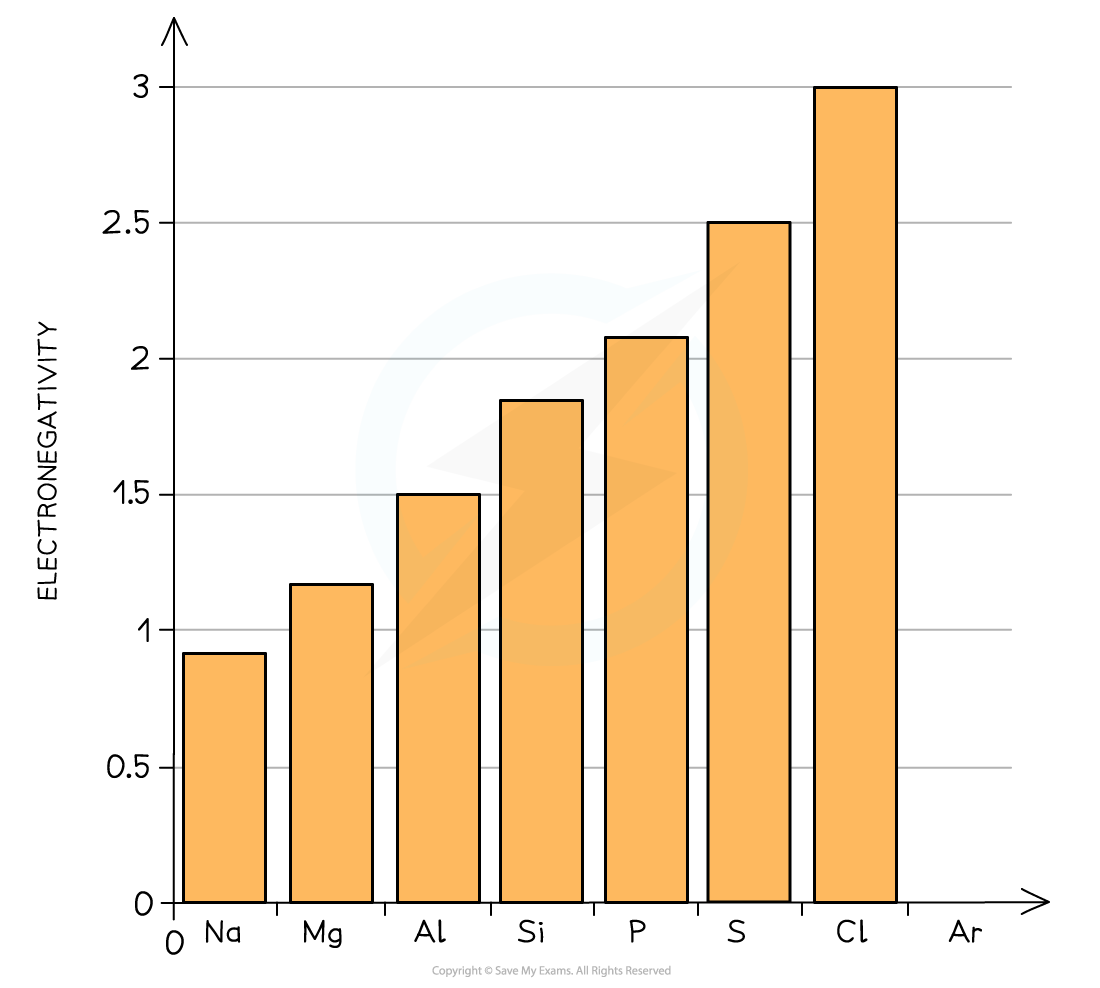
This explains the shift across Period 3:
- Na to Al: Low electronegativity
form Giant Metallic lattices. - Si: Intermediate
forms Giant Covalent lattice. - P to Cl: High electronegativity
form Simple Molecular structures (covalent bonds within, weak forces between).
🔥 3. Reactions of Period 3 Elements
A. Reaction with Oxygen
Elements react to form oxides with their highest stable oxidation states (except Sulfur, which mostly forms
| Element | Equation | Reaction | Flame Colour | Product Obs. |
|---|---|---|---|---|
| Na | Vigorous | Bright yellow | White solid | |
| Mg | Vigorous | Bright white | White solid | |
| Al | Fast (powder) | Bright white | White powder | |
| Si | Slow (high heat) | Bright sparkles | White powder | |
| P | Vigorous | Yellow/White | White clouds | |
| S | Gentle | Blue | Toxic gas | |
| reaction: vixen’s vulva feels so very good | ||||
| flame: Bright (yellow white white sparkles) yellow blue | ||||
| product: white (solid solid powder powder clouds) toxic gas |
B. Reaction with Chlorine
| Element | Equation | Reaction | Product |
|---|---|---|---|
| Na | Vigorous, heat | white solid | |
| Mg | Vigorous, heat | white solid | |
| Al | Vigorous, heat | pale yellow solid | |
| Si | Slow, heat | colourless liquid | |
| P | Slow, excess | ||
| reaction: vigorous vigorous vigorous slow slow |
C. Reaction with Water (Na and Mg only)
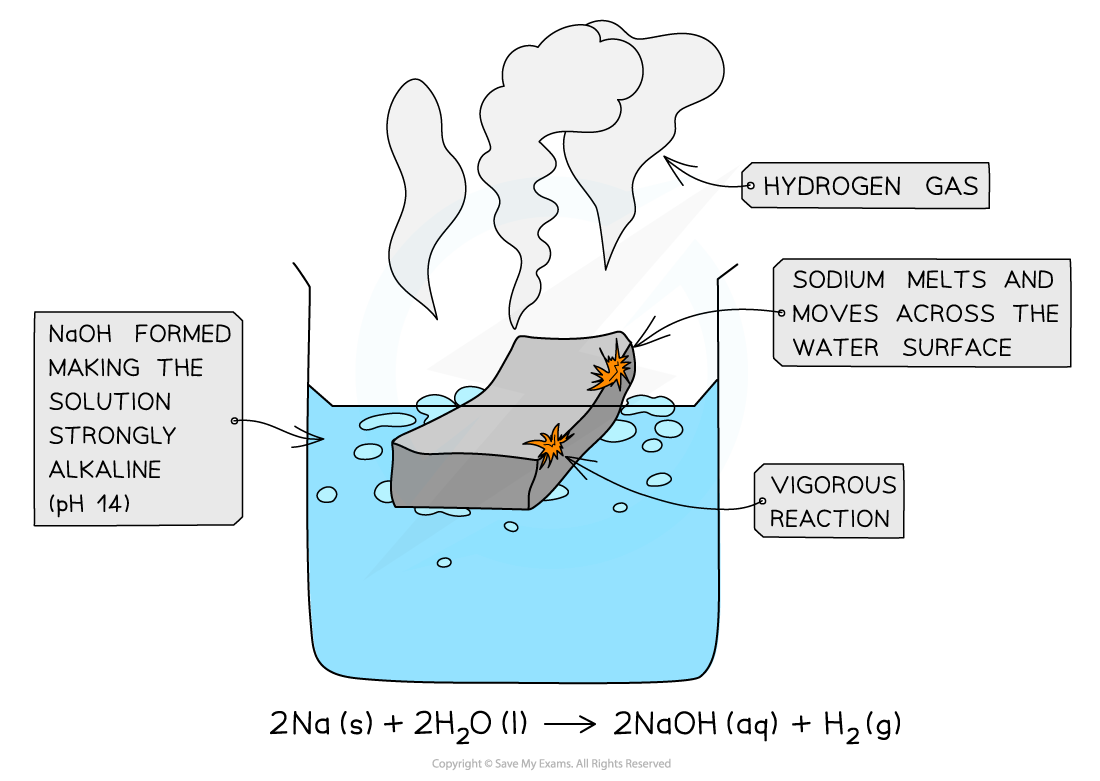
- Sodium (Cold Water): Vigorous. Melts into a ball, fizzes, hydrogen gas given off.
(Strongly alkaline, pH 14)
- Magnesium (Cold Water): Extremely slow.
(Weakly alkaline, pH 9-11, due to low solubility of )
- Magnesium (STEAM): Vigorous reaction.
🧪 4. Period 3 Oxides & Hydroxides
Acid / Base Nature of Oxides
The nature of the oxides shifts from Basic
| Oxide | Structure/Bonding | Acid/Base Nature | Reaction with Water | pH of solution |
|---|---|---|---|---|
| Giant Ionic | Basic | 12 - 14 | ||
| Giant Ionic | Basic | 8 - 10 | ||
| Giant Ionic (covalent char.) | Amphoteric | Insoluble | - | |
| Giant Covalent | Acidic | Insoluble | - | |
| Simple Molecular | Acidic | 1 - 2 | ||
| Simple Molecular | Acidic | 1 - 2 | ||
| Simple Molecular | Acidic | 1 |
Past Paper Trap: Amphoteric Aluminium Oxide
You must know the equations for
acting as both an acid and a base. This comes up frequently!
- As a base (reacting with acid):
- As an acid (reacting with hot conc. base):
(Note: The product is sodium aluminate).
Past Paper Trap:
is insoluble in water. However, it is classified as an acidic oxide because it reacts with hot, concentrated alkali:
Hydroxides
: Strong base. : Weak base (used in indigestion remedies). : Amphoteric. - With Acid:
- With Base:
- With Acid:
🌫️ 5. Period 3 Chlorides & Water
The behaviour of chlorides with water depends entirely on their bonding.
| Chloride | Bonding | Structure | Reaction with Water | pH | Observations |
|---|---|---|---|---|---|
| Ionic | Giant Ionic | Dissolves (hydration) | 7.0 | White solid dissolves | |
| Ionic | Giant Ionic | Dissolves (slight hydrolysis) | 6.5 | White solid dissolves | |
| Covalent | Simple Molec. | Hydrolyses highly exothermic | 3.0 | White solid dissolves, white fumes of HCl | |
| Covalent | Simple Molec. | Hydrolyses rapidly | 2.0 | White fumes of HCl, off-white ppt ( | |
| Covalent | Simple Molec. | Hydrolyses violently | 2.0 | White fumes of HCl |
The Aluminium Chloride Anomaly
Aluminium chloride is unique. At room temperature, solid
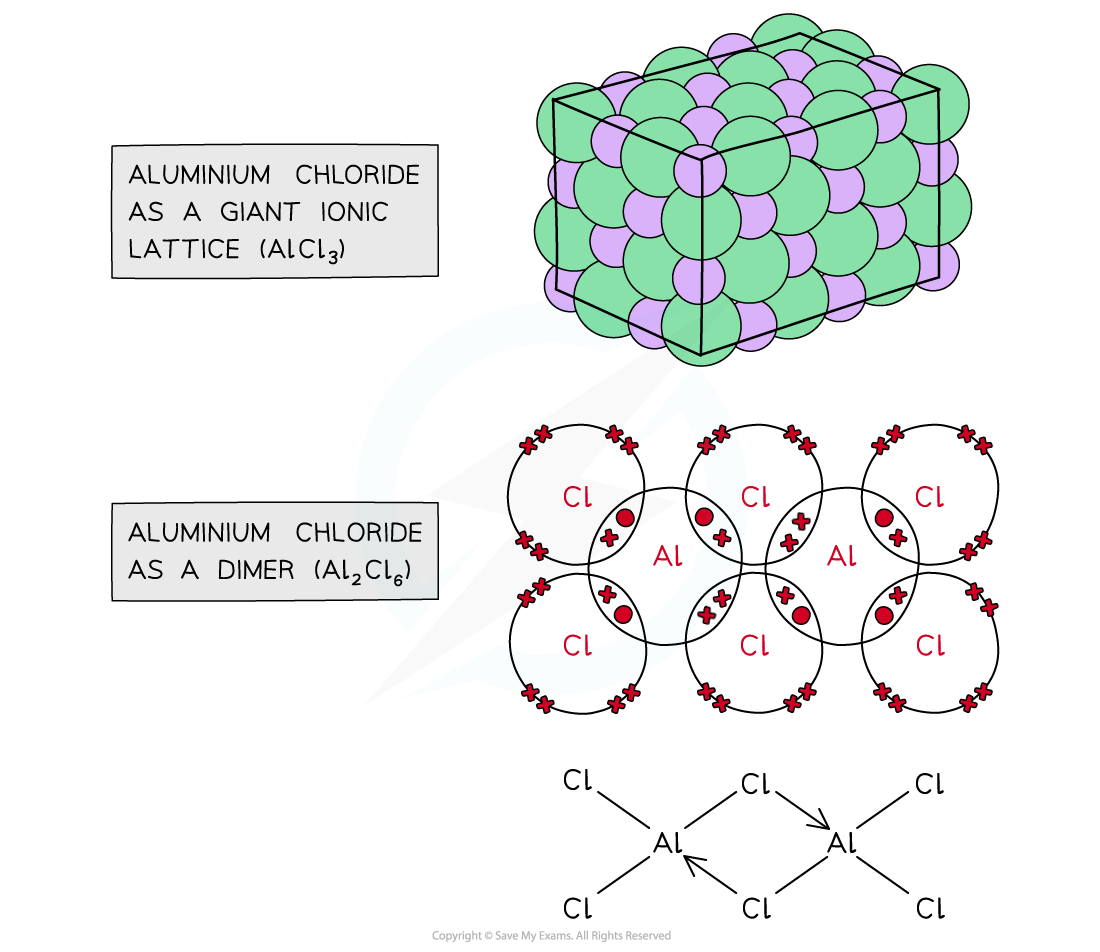
Why does
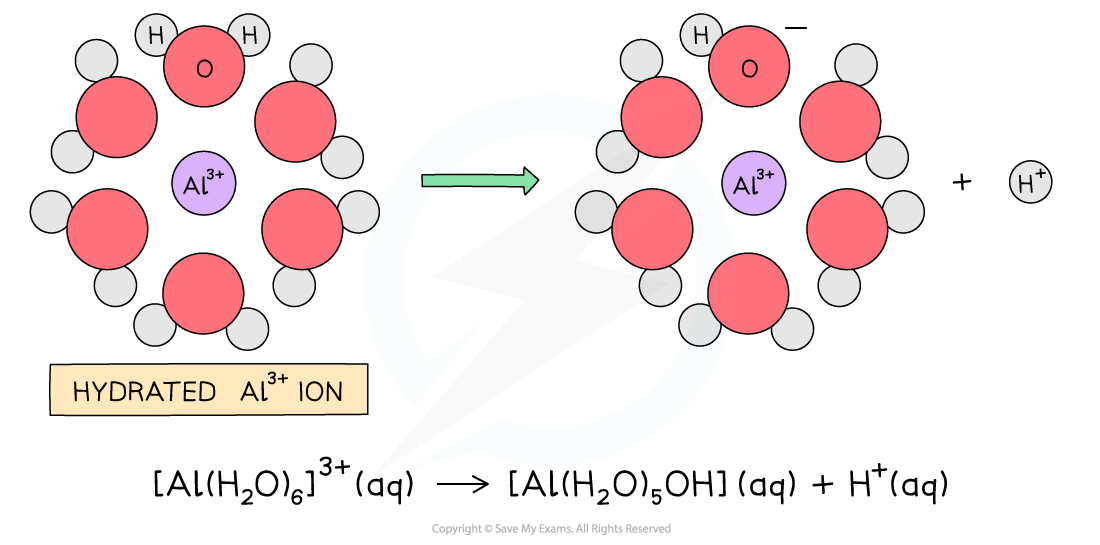
Hydrolysis of Silicon(IV) Chloride
🔮 6. Predicting Chemical Periodicity (9.3)
Examiners love giving you an unknown element (e.g., Selenium, Germanium, Gallium) and asking you to predict its properties based on its position in the periodic table.
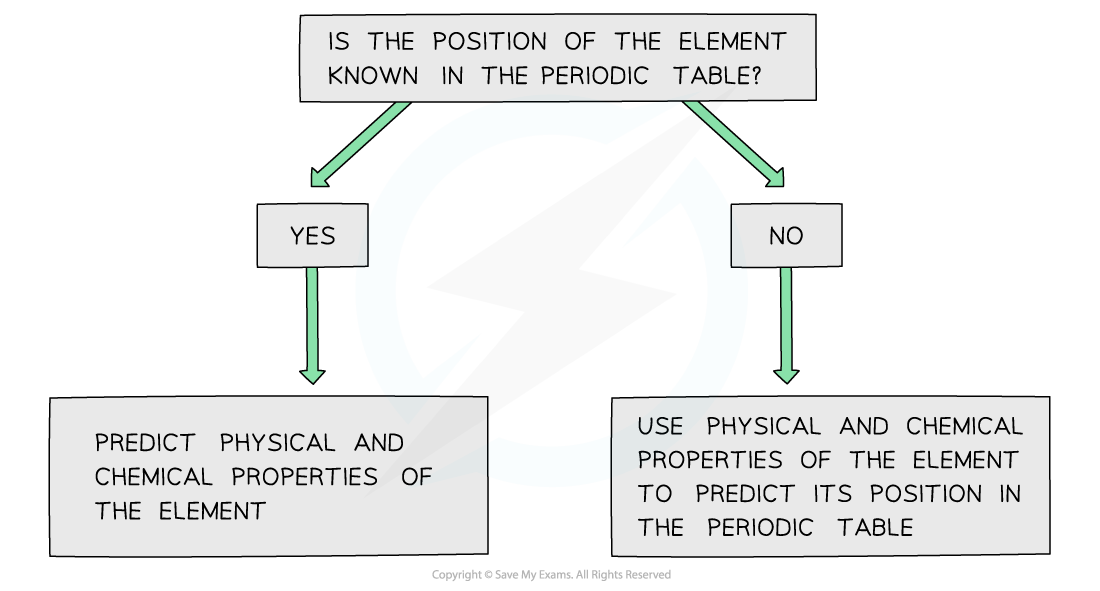
How to approach these questions:
- Identify the Group: Tells you the number of valence electrons and likely oxidation states.
- Example: Selenium is in Group 16. It will behave like Sulfur.
- Identify the block/type: Metal, Metalloid, or Non-metal?
- Example: Se is a non-metal. It will likely form a simple molecular structure (like
), have a low melting point, and form acidic oxides ( ).
- Example: Se is a non-metal. It will likely form a simple molecular structure (like
- Reactions: Apply the known period 3 element template.
- Reaction with water: Simple molecules don’t react with water.
- Reaction with oxygen: Forms covalent oxides.
- Reaction with chlorine: Forms simple covalent chlorides (
) that will hydrolyse in water to give white fumes of .
🧠 Expert Examiner Tips & Common Traps
Having analysed decades of past papers (2009-2022), here are the exact places students lose marks:
- Dissolving vs. Hydrolysing:
and dissolve in water (physical process, ions simply get hydrated). and hydrolyse (chemical reaction, bonds break, gas is evolved). Do not use the word “dissolve” for covalent chlorides!
- Missing State Symbols:
- In periodicity equations, state symbols are often required for the marks. Always include them, especially for the formation of
or .
- In periodicity equations, state symbols are often required for the marks. Always include them, especially for the formation of
- Phosphorus vs. Sulfur Melting Points:
- You must know that Sulfur (
) has a higher melting point than Phosphorus ( ). Both are simple molecular, but is a larger molecule with more electrons, meaning it has stronger instantaneous dipole-induced dipole forces (London forces).
- You must know that Sulfur (
- Silicon Dioxide (
): - Do NOT write
. It does not react with water. It is a giant covalent structure (like sand/quartz). Its acidic nature is only proven by reacting it with hot, concentrated .
- Do NOT write
- Oxidation Numbers Check:
- When asked to state oxidation numbers across period 3 oxides, ensure you include the ”+” sign. (e.g., +1, +2, +3, +4, +5, +6).
- Aluminium Chloride Bonding:
- Solid
= Ionic (with covalent character). - Gaseous
= Covalent (dimer with dative/coordinate bonds).
- Solid
- “Suggest the type of bonding…”
- If an unknown chloride melts at a low temperature and reacts violently with water to give pH 2, it is simple molecular / covalent. If it melts at
and forms a pH 7 solution, it is giant ionic.
- If an unknown chloride melts at a low temperature and reacts violently with water to give pH 2, it is simple molecular / covalent. If it melts at