Core Concept
- Regardless of the specific reaction (nitration, halogenation, Friedel-Crafts), the core mechanism for benzene remains strictly identical.
- The high electron density of the
-ring attracts powerful electrophiles ( )
Mechanism:
Electrophilic Aromatic Substitution
It is a two-step organic reaction where an electrophile (
) replaces a hydrogen atom on an aromatic ring, restoring aromaticity in the final step.
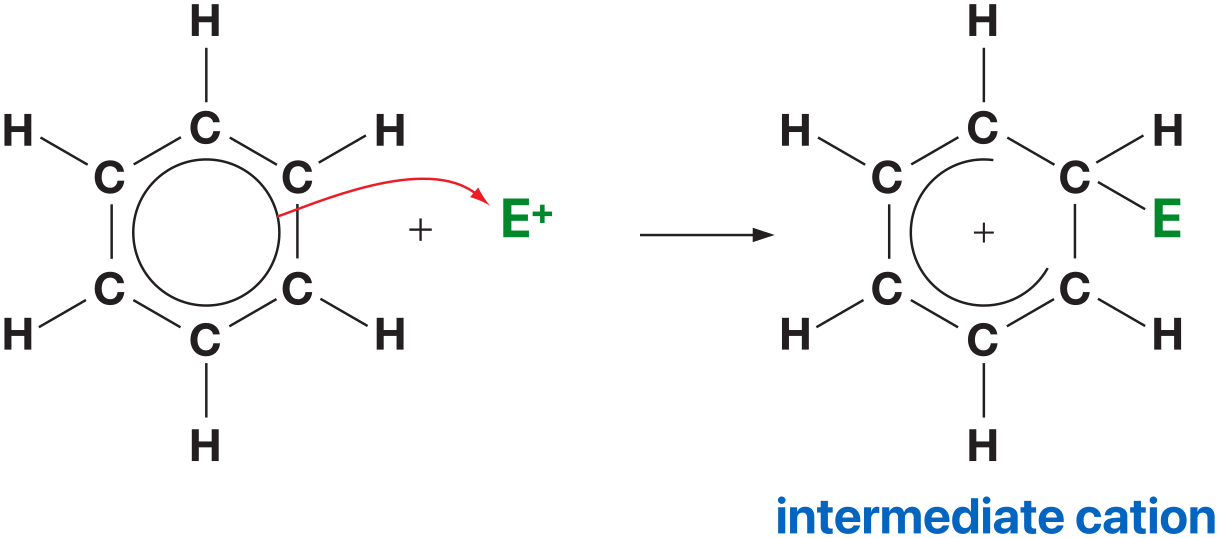
Step 1: Attack of the Electrophile (Rate-Determining Step)
- Two
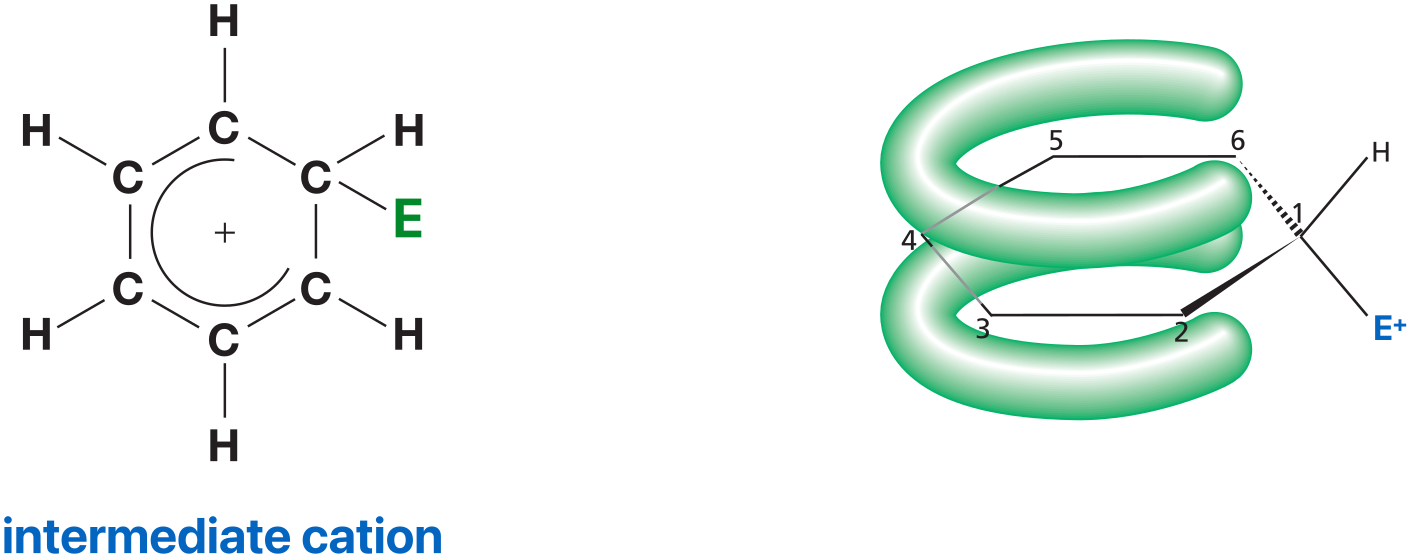
-electrons from the delocalised ring are used to form a dative covalent bond with the electrophile ( ). - This breaks the aromatic ring, forming an unstable, non-aromatic intermediate carbocation.
- The remaining four
-electrons are spread over the remaining five carbon atoms of the ring, in a five-centre delocalised orbital.
Step 2: Deprotonation (Fast Step)
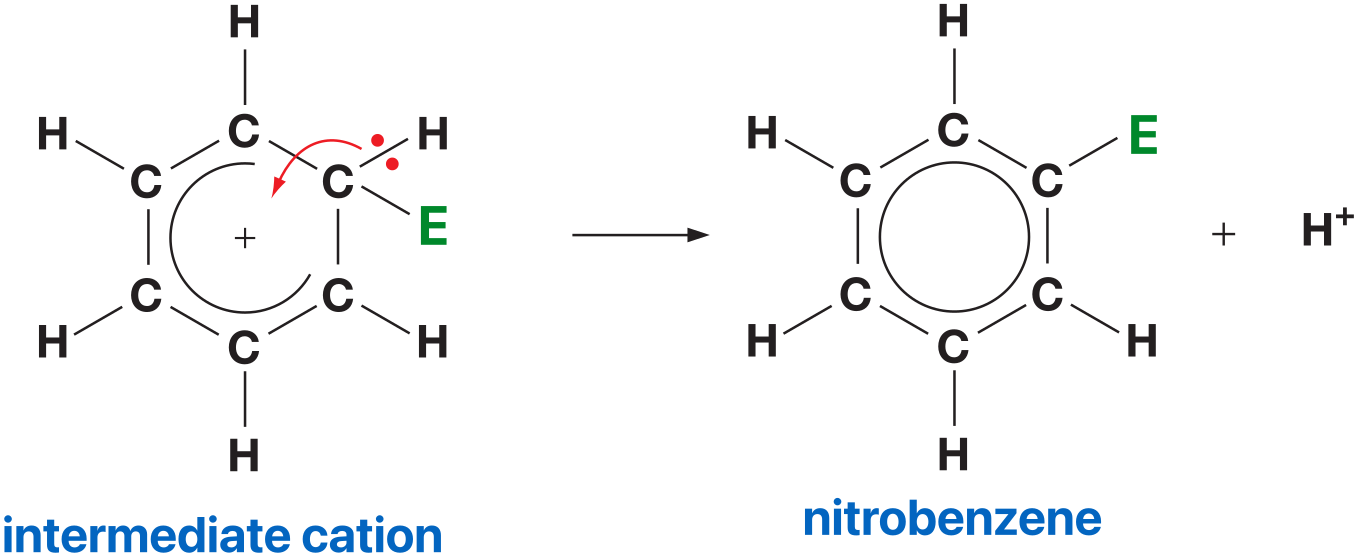
- The unstable intermediate rapidly loses a proton (
). - The two electrons from the
bond collapse back into the ring, restoring the delocalised -system and the aromatic stability.
Things to consider when drawing mechanism
- The curly arrow in Step 1 MUST start from the ring of delocalised electrons and point exactly to
. - The curly arrow in Step 2 MUST start exactly from the centre of the
bond and point into the ring.