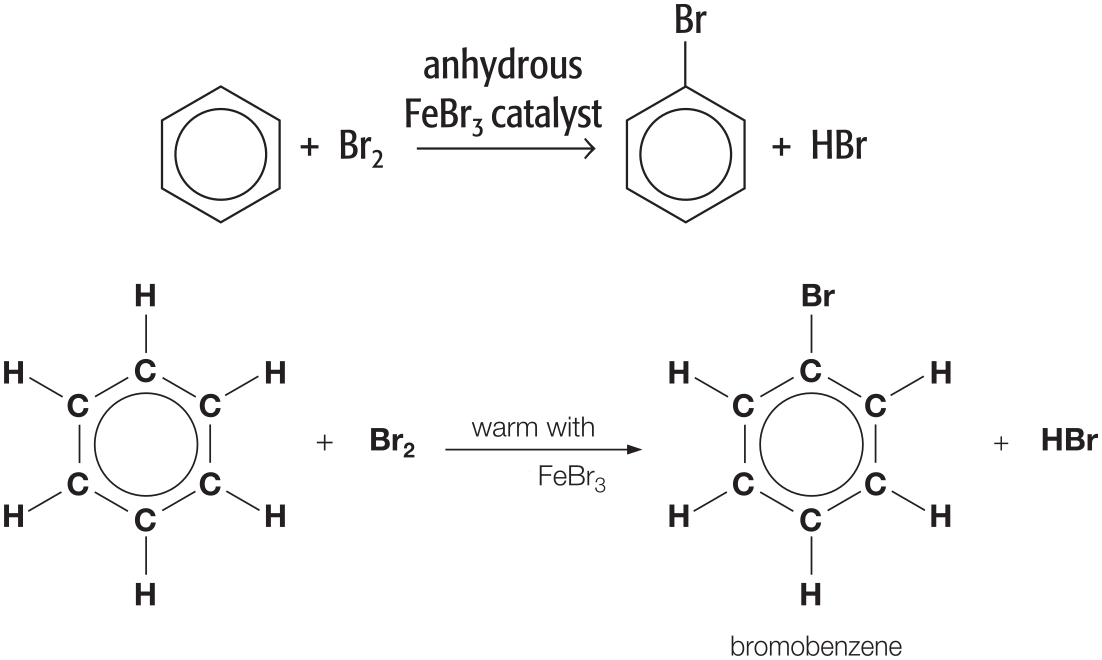
1. Reaction
Reaction
Conditions
- Reagents: Dry
or - Conditions:
- Room temperature
- In the dark
- Presence of a halogen carrier catalyst.
- Electrophile: Halonium Ion (
or )
2. Mechanism:
Bromination: Electrophilic Substitution
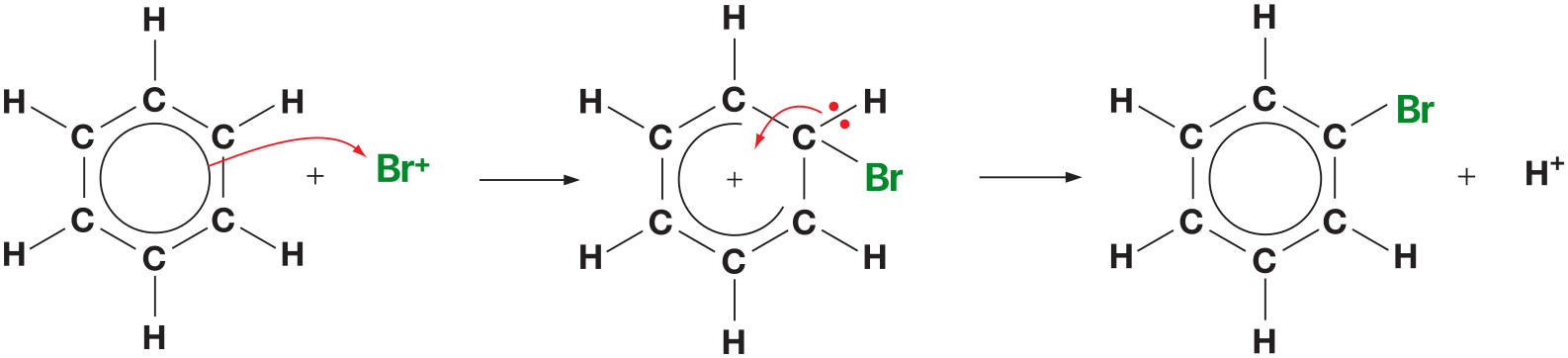
- The bromine cation is attracted to the delocalised
bond of benzene. - It eventually breaks the ring of electrons and forms a dative
bond to one of the carbon atoms of the ring. - The remaining four
electrons are spread over the remaining five carbon atoms of the ring, in a five-centre delocalised orbital, forming an intermediate carbocation. - The carbocation loses a proton, the electrons of the former
bond reform the sextet of electrons.

3. Formation of Electrophile
Halogen Carrier Catalysts
A halogen carrier catalyst is a Lewis acid that helps generate the strong electrophile needed to react with the highly stable benzene ring.
Examples of halogen carrier catalysts:
- For chlorination:
or - For bromination:
or
Need for a Halogen Carrier Catalyst
- The continuous ring of delocalised
-electrons present in benzene make it exceptionally stable. - Alkenes easily react with diatomic halogens because the double bond is reactive enough to polarise the halogen molecule on its own.
- Benzene is too stable to do this.
- Therefore a catalyst is needed to “activate” the halogen molecule and turn it into a powerful electrophile capable of breaking benzene’s aromatic stability.
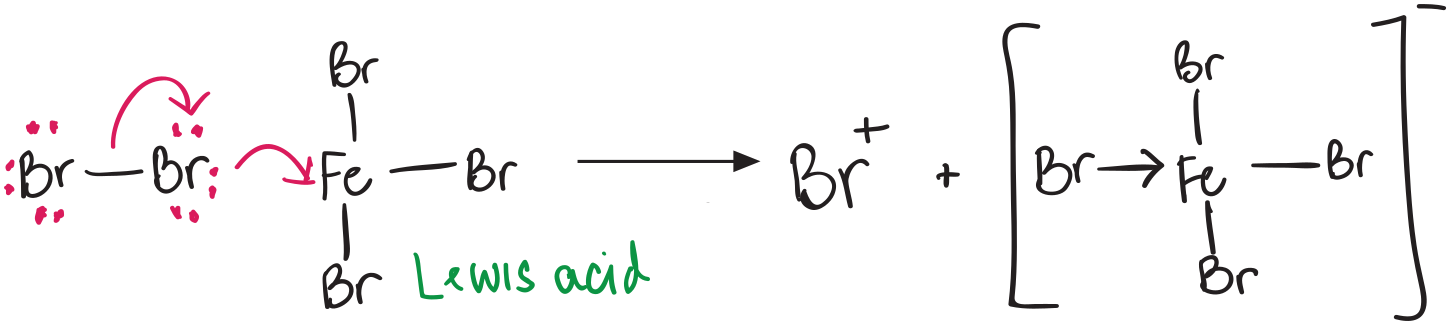
Formation of Electrophile
- The iron atom in anhydrous iron (II) bromide is electron-deficient, making it a Lewis Acid.
- The iron atom accepts a lone pair of electron from one of the bromine atoms to form a dative bond.
- This highly polarises the
bond, weakening it. - Eventually, the
bond breaks by heterolytic fission. - The products are the strong electrophile
and
4. Regeneration of Catalyst
Regeneration of Catalyst
- The
formed by the mechanism reacts with the formed during the formation of the electrophile. - The halogen carrier catalyst (
) is regenerated.